
Solar tracking systems really live or die by the quality of their movement and the reliability of their electrical connections. If wire management is sloppy, you’re basically inviting mechanical stress, cable abrasion, or even electrical faults—any of which can drag down performance and, honestly, eat into your energy yield. Effective wire management isn’t just a box to check; it’s core to keeping tracking accurate, maximizing uptime, and making sure your investment actually lasts.
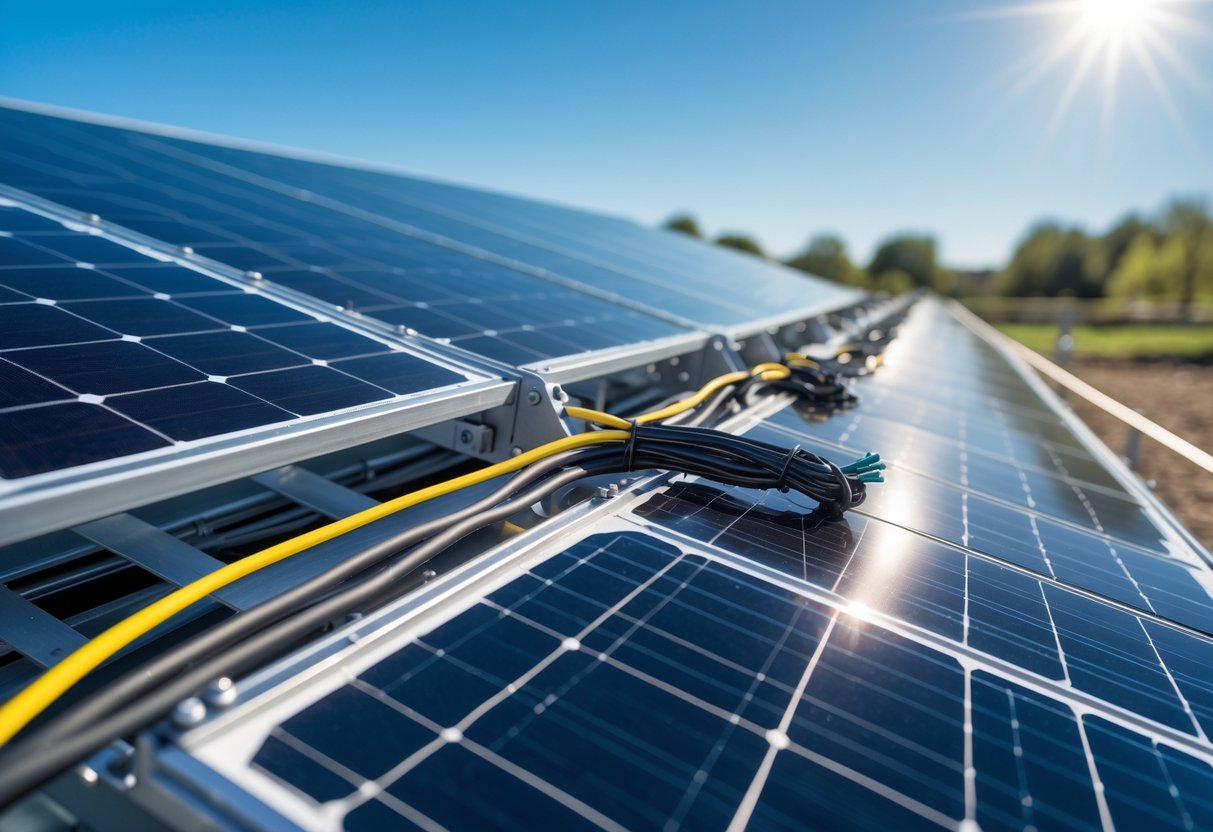
It’s easy to get caught up in the nuts and bolts of tracker mechanics or panel alignment, but the wiring that ties everything together is just as critical—maybe more so, depending on your O&M nightmares. The way you route, support, and shield those cables makes all the difference when it comes to surviving constant tracker motion, brutal UV, and whatever weather gets thrown at you. Plus, if you’ve ever had to troubleshoot a rat’s nest of wires, you know how much organized cable runs can save your sanity (and labor hours).
Let’s dig into why wire management isn’t just a detail but a real performance driver in solar tracking systems. If you’re planning, buying, or maintaining these projects, nailing the fundamentals here is going to pay off in efficiency, durability, and, frankly, lower headaches down the line.
Critical Role of Wire Management in Solar Tracking Systems
Wire management is absolutely central to how well a solar tracker system performs, year in and year out. It’s not just about tidy cable trays—it’s about electrical reliability, mechanical stability, and keeping O&M costs down whether you’re dealing with a massive utility site or distributed commercial installs.
Impact on System Performance and Reliability
Wire management has a direct, sometimes brutal, impact on both electrical and mechanical performance. If you cut corners on routing or support, you’re risking insulation rub-through, cable fatigue, and those maddening intermittent faults that tank system availability.
We keep cable tension and spacing dialed in to avoid chafing as the trackers swing back and forth. That’s how you avoid arc faults, ground faults, and those sneaky bits of signal interference that crop up in control wiring.
On the maintenance side, organized wiring with clear labeling just makes life easier. Techs can trace circuits without playing detective, so you’re back online faster. Over time, that’s fewer truck rolls and better reliability numbers, which, let’s be honest, everyone wants.
| Performance Factor | Effect of Proper Wire Management |
|---|---|
| Electrical Efficiency | Reduces voltage drop and connection losses |
| Mechanical Durability | Minimizes stress on moving components |
| Safety | Prevents overheating and electrical faults |
| Maintenance | Simplifies inspection and repair work |
Wire Management in Single Axis Trackers
Single axis trackers are a special beast. The daily rotation means your cable runs have to flex and move—if you don’t plan for that, you’ll be replacing wires way too soon. We lean on torque tube hangers, flexible carriers, and well-sized service loops to keep slack where it’s needed and avoid unnecessary strain.
Every cable route needs a smooth path with a proper bend radius—tight corners are just asking for trouble. Attachment points? We’re using UV-rated clips or stainless clamps that can take the sun and weather for the long haul.
Supports are spaced out—every 4 to 6 feet is pretty standard—to stop sagging and keep vibration in check. This keeps wires out of the tracker’s pinch points and, importantly, out of the way of shading, so you’re not losing kilowatt-hours for no good reason.
Challenges with Bifacial Modules and Split J Boxes
Bifacial modules and split junction boxes make wire management a bit more complicated. With glass on both sides and more output leads, you’ve got to be extra careful about how you run cables—one stray wire casting a shadow on the backside can eat into your bifacial gain.
We take care to route cables so they don’t shade the rear, and with split J boxes (which, honestly, are everywhere now), we keep jumpers short and use low-profile clips to maintain clean, low-resistance paths.
Exposure is a real issue here—both sides of the panel are in play—so we stick with components that are seriously UV and heat resistant. If you don’t, expect to be swapping out brittle ties and cracked insulation way too soon.
Best Practices and Strategies for Solar Wire Management
Good wire management starts with choosing robust materials, but it’s also about installation habits and sticking with products that actually meet industry standards. These choices ripple out into system performance, safety, and, yeah, the O&M budget—whether you’re doing a residential rooftop or a 100 MW tracker field.
Wire Management Strategies and Materials
We’re always aiming for cable runs that are routed, supported, protected, and labeled in a way that makes sense—not just for install day, but for the next 25 years. Routing is about keeping wires away from sharp edges, moving joints, or direct UV exposure. Regular support spacing keeps cables from sagging or getting yanked as the tracker moves.
Materials have to last. Stainless steel clips (304 or 316) are our go-to for corrosion resistance, especially on big sites or anywhere near salt air. UV-stabilized nylon ties and composite clips are more budget-friendly for rooftops or fixed-tilt, but you’ve got to check their specs for longevity.
| Material Type | Key Advantage | Typical Use |
|---|---|---|
| Stainless Steel | Corrosion resistance | Utility-scale, marine environments |
| UV-Stabilized Nylon | Cost efficiency | Residential and commercial roofs |
| Aluminum | Lightweight, modular | Large arrays and conduit systems |
Color-coded insulation and clear labeling aren’t just nice-to-haves—they keep maintenance safe and fast, especially when you’re tracing DC strings or sorting out AC circuits in the field.
Product Innovations and Industry Standards
Suppliers like HellermannTyton, IronRidge, and CAB Solar are always rolling out new gear—tool-free clips, integrated grounding, flexible cable carriers—that actually make installs faster and more reliable.
For single-axis trackers, torque tube hangers and flexible carriers that move with the rotation are pretty much essential. On floating PV, marine-grade plastics and stainless everything are non-negotiable if you want to avoid corrosion headaches.
And of course, we’re not skipping compliance: NEC Article 690 covers circuit separation, grounding, UV protection—it’s a must. If you’re serious about durability, look for products tested to ASTM G155 and ISO 4892 for UV and material resilience. Meeting these standards isn’t just about passing inspection; it’s about making sure your system keeps performing when it’s five, ten, or twenty years old.
Long-Term Cost and Maintenance Considerations
Solid wire management really does a number on operation and maintenance (O&M) costs—less cable wear, fewer faults, and not as much downtime eating into your margins. When you keep routing tidy and use robust materials, you’re dodging a lot of headaches down the line.
We’ve got a routine for this: annual inspections where we’re on the lookout for UV damage, any fittings working themselves loose, or signs of cables getting cooked by heat cycles. And after a big storm rolls through? Yeah, we’re out there checking that nothing’s come undone.
Honestly, splurging a bit on components rated for 25 years usually pays off. Swapping parts every few years is a pain, both in labor and lost production. If you can buy clips and trays in bulk—especially standardized ones—it helps trim the per-unit spend. Pairing durable gear with a disciplined inspection schedule is the only way I’ve seen to keep system output steady and make sure your solar assets go the distance.