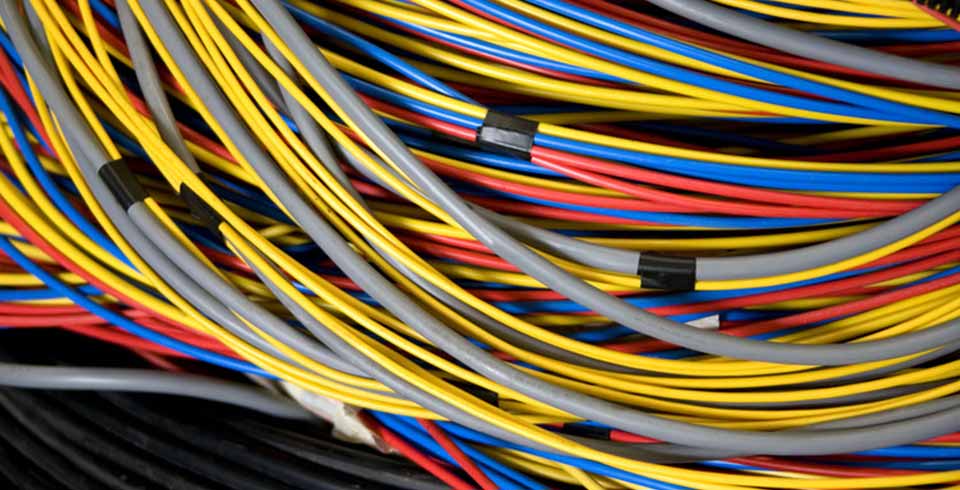
Electrical wires form the backbone of every electrical system, but not all wires are created equal. The materials used to construct these wires directly impact their performance, safety, and suitability for different applications. Understanding what goes into electrical wire construction helps us make informed decisions for residential, commercial, and industrial projects.
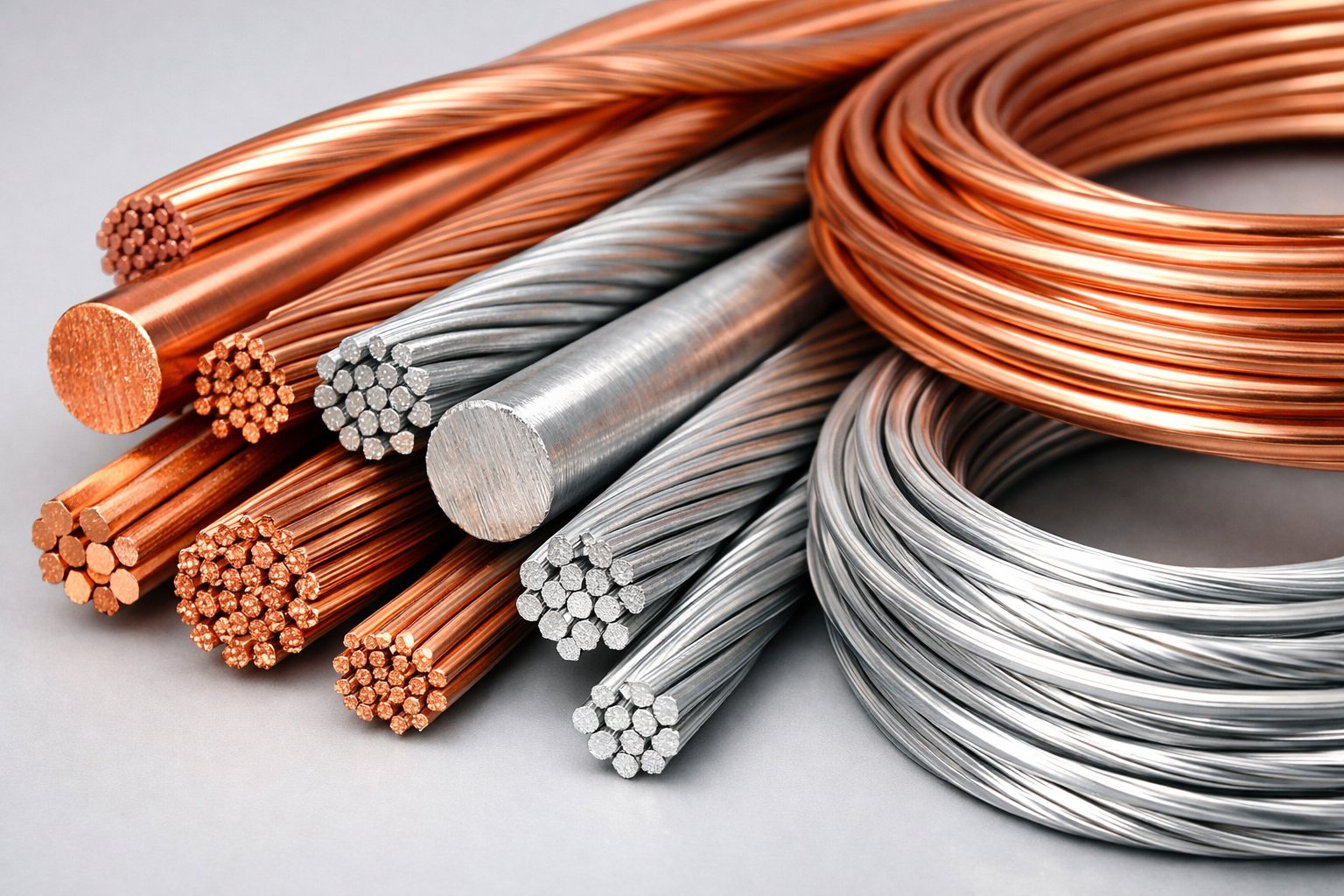
The conductor material at the center of an electrical wire—typically copper or aluminum—determines its conductivity, durability, and cost, while insulation and sheathing materials protect the conductor and ensure safe operation. Each material brings distinct advantages and limitations that affect how well the wire performs under specific conditions.
We’ll examine the core conductor materials that carry electrical current, then explore the insulation and sheathing options that protect these conductors. This knowledge allows us to select the right wire for any electrical installation, balancing factors like conductivity, flexibility, temperature resistance, and budget.
Core Materials Used in Electrical Wire
The conductor at the center of electrical wire determines its performance characteristics, with copper and aluminum dominating modern installations due to their superior conductivity and cost-effectiveness. Specialty materials like silver and steel serve specific applications where standard conductors cannot meet technical requirements.
Copper Wire
Copper wire stands as the most widely used conducting material in electrical applications. We see copper in residential, commercial, and industrial settings because it offers excellent electrical conductivity at approximately 97% of the International Annealed Copper Standard (IACS).
Bare copper wire provides the foundation for most electrical wiring systems. The material’s ductility allows for easy bending and installation without breaking, while its resistance to corrosion ensures long-term reliability. Copper wiring maintains consistent performance across temperature variations and handles high current loads without excessive heat buildup.
We find copper wire in multiple forms depending on the application. Solid copper conductors work well for permanent installations, while stranded versions offer flexibility for applications requiring frequent movement. Magnet wire uses thin copper conductors with specialized insulation for motors and transformers.
The primary limitation of copper remains its cost, which fluctuates with global commodity markets. Despite this drawback, copper’s superior conductivity and mechanical properties make it the preferred choice for critical electrical systems.
Aluminum Wire
Aluminum wire offers a lightweight and cost-effective alternative to copper conductors. The material weighs approximately one-third as much as copper while maintaining about 61% of copper’s conductivity. This weight advantage makes aluminum wiring particularly valuable in overhead power transmission lines and large-scale distribution systems.
Aluminum wiring gained popularity in residential construction during the 1960s and 1970s when copper prices spiked. However, we now recognize specific installation challenges with aluminum. The material expands and contracts more than copper under thermal cycling, which can loosen connections over time. Aluminum also oxidizes when exposed to air, forming a resistant layer that can increase connection resistance.
Modern aluminum wire applications require specialized connectors and installation techniques. We use anti-oxidant compounds at connection points and ensure proper torque specifications to maintain safe, reliable joints. Aluminum conductors work best in larger gauge sizes where proper termination practices can be consistently applied.
Silver and Other Specialty Conductors
Silver possesses the highest electrical conductivity of all metals at 105% IACS. We use silver-plated copper wire in applications demanding minimal signal loss and maximum efficiency. The plating combines silver’s superior surface conductivity with copper’s structural strength and lower cost.
These specialty conductors appear in high-frequency applications, aerospace systems, and premium audio equipment. Silver’s resistance to oxidation at typical operating temperatures maintains consistent performance over time. The material excels in environments where even small efficiency gains justify the significant cost premium.
Gold plating serves similar purposes in low-voltage electronic applications. We select gold for its oxidation resistance and reliable contact surfaces in connectors and circuit boards.
Steel and Alloy Wires
Steel wire serves structural rather than purely electrical functions in many applications. We find steel cores in aluminum conductor steel-reinforced (ACSR) cables, where the steel provides mechanical strength while aluminum handles current transmission. This combination appears in long-span overhead power lines requiring high tensile strength.
High-strength alloy wires combine various metals to achieve specific properties. Copper alloys increase tensile strength for overhead installations while maintaining reasonable conductivity. These materials resist sagging and mechanical stress better than pure copper or aluminum.
Steel conducting materials also appear in grounding applications and cathodic protection systems. The material’s lower conductivity becomes acceptable when mechanical durability and corrosion resistance take priority over electrical performance.
Insulation, Sheathing, and Construction Types
Wire protection and internal structure determine performance across different electrical applications. The materials that cover conductors prevent current leakage and environmental damage, while the physical arrangement of metal strands affects flexibility and durability.
Insulating Materials for Wire
PVC (polyvinyl chloride) remains the most common insulating material for residential and commercial applications due to its affordability and adequate protection in standard conditions. We see it most frequently in THHN wire, which combines PVC with a nylon coating for improved durability and heat resistance up to 90°C.
XLPE (cross-linked polyethylene) offers superior heat resistance and performs better in moisture-prone environments than standard PVC. This material tolerates temperatures up to 90°C in wet conditions and handles higher current loads without degradation.
For high-temperature industrial settings, we recommend fluoropolymer insulation materials like PTFE or FEP. These materials maintain their insulating properties at temperatures exceeding 200°C and resist chemical exposure from oils and solvents.
Rubber insulation provides excellent flexibility for portable cord applications and outdoor equipment. The material withstands mechanical stress and temperature fluctuations better than rigid plastics, making it ideal for extension cords and power tools.
Types of Wire Sheathing
Cable sheathing serves as the outer protective layer that shields insulated wires from physical damage, moisture, and UV exposure. We distinguish between sheathing and insulation because sheathing covers multiple insulated conductors bundled together, while insulation wraps individual wires.
Common sheathing materials include:
- PVC – Standard protection for indoor cables with moderate durability
- PE (polyethylene) – Enhanced moisture resistance for underground and outdoor installations
- Nylon – Abrasion resistance and chemical protection in industrial environments
- Thermoplastic elastomer – Flexibility in low temperatures for outdoor applications
The cable designation often indicates sheathing type. NM-B (non-metallic sheathed cable) uses PVC sheathing for dry indoor locations, while UF-B (underground feeder) employs solid thermoplastic sheathing that resists moisture penetration.
Solid Versus Stranded Wire Designs
Solid wire consists of a single metal conductor and maintains its shape when bent. We use solid wire in permanent installations like building wiring because it costs less and provides better connections at termination points. The rigid construction works well in conduit and remains stationary after installation.
Stranded wire contains multiple thin metal strands twisted together, creating a flexible conductor that resists breaking from repeated bending. Applications requiring movement or vibration demand stranded wire construction—think appliance cords, vehicle wiring, and robotics.
The trade-off involves cost and current capacity. Stranded wire costs more to manufacture but delivers superior flexibility. For the same gauge rating, solid wire carries slightly more current because stranded designs have small air gaps between individual strands.