

 Support
 Sign In
 Cart
Cart 
Custom DC over molds are a bit of a game-changer in cable assembly, especially when you care about ruggedness and reliability. Basically, the process involves molding protective materials right around DC power connectors and cable junctions. The result? A seamless, tough barrier that keeps out moisture, dust, and pretty much anything else that could mess with your signal or power delivery.
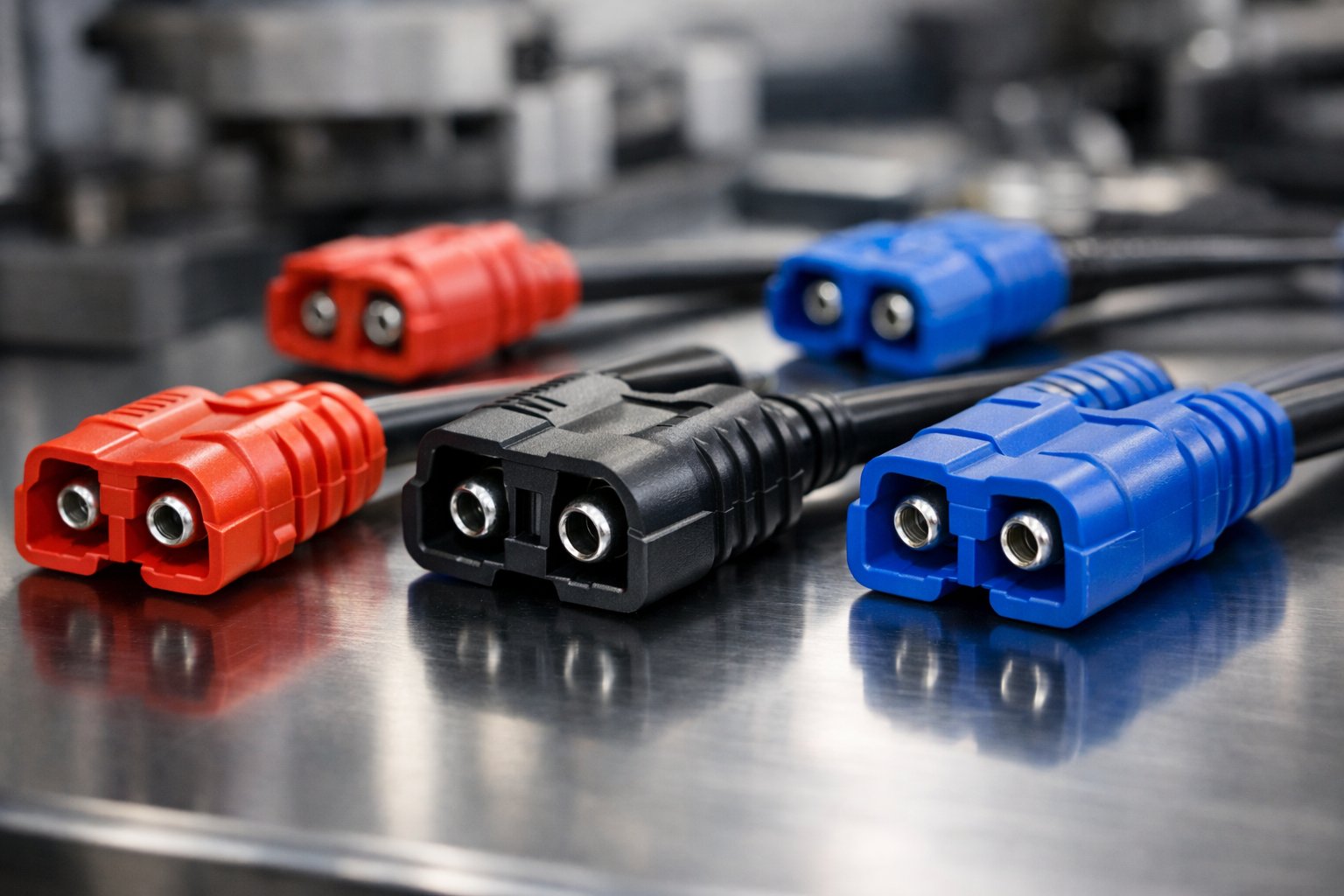
We rely on custom DC over molds to boost the durability and performance of our power cable assemblies. With the right material, color, and shape, you can dial in exactly what your project needs—whether that’s a specific flex profile, unique branding, or simply making the assembly easier to install in the field. It’s a solid way to get rid of the usual weak spots where cables meet connectors, since the overmold supports the solder joints and adds proper strain relief. That means fewer headaches down the road from failed connections or intermittent faults.
From what I’ve seen, knowing your way around the features, benefits, and production methods of custom DC over molds pays off—especially if you’re speccing parts for solar, industrial automation, medical devices, or even EV charging. Overmolding isn’t just about protection; it’s about making a cable assembly that lasts and actually works in the real world.
Key Features and Benefits of Custom DC Over Molds
Custom DC over molds do a lot for cable assemblies—think robust environmental protection, more design options, and even branding. With the right combination of strain relief, material, and color, you can make sure your assemblies hold up under tough conditions without signal loss or unexpected failures.
Essential Role of Overmolding in Cable Assemblies
Overmolding takes a standard cable and makes it, well, not so standard anymore. By molding a protective layer right over the critical connection points, you basically armor the assembly against whatever the environment throws at it. We’re talking injection molding here—so the barrier is seamless and tight around connectors, transitions, and even panel entries. If you’ve ever had a cable fail because water or dust snuck in, you’ll appreciate how overmolding keeps that from happening.
The process bonds the overmold to both the cable jacket and the connector backshell, turning everything into a single, rugged unit. In DC applications, this is crucial for keeping voltage-carrying connections dry and secure. Need EMI suppression? No problem—we’ll embed ferrites or shielded components right inside the overmold. Grommets, panel mounts, weird cable splits—overmolding handles all of it.
Common Overmolded Components:
- Connector backshells and housings
- Cable-to-connector transitions
- Panel mount grommets
- Inline splices and Y-connectors
Strain Relief and Environmental Protection
Strain relief is where custom overmolds really shine. Instead of letting all the flex and pull hammer away at the connector pins or solder joints, the overmold spreads those forces out over a flexible zone. This is huge for solar installers or anyone who’s had to troubleshoot a broken wire inside a connector after a few months in the field.
For environmental sealing, it’s all about picking the right material and nailing the mold design. Thermoplastic elastomers are great for flexible, water-resistant seals—IP67 or IP68 is absolutely doable if you get the tooling right. For nasty chemical environments, thermosets are the way to go since they cure into a tough, chemical-proof shell.
Durometer matters here, too. Softer compounds (around 40-60 Shore A) are grippy and absorb impact, while harder materials are better if the cable is going to get dragged around or scraped up a lot.
Customization Options: Materials, Color Coding, and Logos
Material selection is a big part of what makes custom DC over molds so versatile. We’re usually working with TPEs, TPUs, or even rigid nylons, depending on how much flex, heat resistance, or chemical protection you need. Color coding is a breeze—just pick your pigment during molding and you’re set. No extra painting or labeling needed.
Color-coded overmolds make field installs and repairs way easier. No more guessing which cable is which when you’re elbow-deep in a junction box. Want your logo or part number molded right into the assembly? That’s totally possible, and it looks professional—not to mention it helps with traceability.
Customization Elements:
- Logos molded into the surface
- Part numbers as raised or recessed text
- Grip ribs or orientation markers
- Mounting features like threaded inserts or snap-fit designs
For prototyping, we’ll machine the mold from aluminum. Once you’re ready for big runs, we switch to hardened steel tooling to handle thousands of cycles. 3D printed pre-molds are a handy way to check fit and function before dropping cash on full tooling.
Design and Manufacturing Process of Custom DC Over Molds
Getting custom DC over molds right means sweating the details—materials, tooling, process control, all of it. The engineering and injection molding work together to make a cable assembly that stands up to real-world abuse and meets whatever spec you throw at it.
Material Selection for Overmolded Cable Assemblies
Material choice is everything. We usually start with elastomeric and thermoplastic options, matching each one to the application’s demands.
TPE (Thermoplastic Elastomer) is my go-to for general flex and strain relief. Santoprene is a nice upgrade if you need more chemical resistance and better adhesion. TPR (Thermoplastic Rubber) is solid for moderate-duty jobs and keeps costs down.
PVC (Polyvinyl Chloride) is still a classic—affordable, durable, and flame-resistant. For abrasion-heavy installs, polyurethane is tough to beat, and if you’re dealing with crazy temperature swings, silicone rubber is the ticket.
You’ve got to make sure your overmold material bonds well with the cable insulation and connector shell. If it doesn’t, you’ll get delamination and leaks—nobody wants that. We’re always checking for chemical resistance, temperature range, hardness (Shore A durometer), and UV stability to match the install environment.
Overmolding Process and Tooling Techniques
Overmolding is all about precision. We use injection molding presses—30-ton to 85-ton is typical, depending on the part size. Amphenol DC Electronics, for example, uses Newbury presses for repeatable quality.
Molds are CNC machined from steel or aluminum, designed for proper flow, venting, and cooling. The cavity is what defines the final look and feel of your overmolded assembly.
During production, we fixture the pre-assembled cable and connectors (including circular connectors, if you’re going that route) inside the mold. Heated material is injected under pressure, flowing around every nook and cranny. Cycle times depend on part geometry and material, but you’re usually looking at 30 seconds to a few minutes, including cooling.
We’re always dialing in injection pressure, melt temp, mold temp, and cooling times to keep everything within spec. If you don’t watch those variables, you risk warping, shrinkage, or incomplete fills—trust me, you don’t want to troubleshoot that on a finished assembly.
In-House Production, Prototyping, and Quality Standards
Our in-house manufacturing setup—with CNC machine shops right on site—lets us handle everything from custom mold fabrication to the finished overmolded cable assemblies. It’s a game changer for lead times and really gives us the reins on quality control.
When it comes to prototyping, we lean heavily on rapid tooling and 3D printing. It’s just more efficient for validating those early designs before we go all-in on production molds. We’ll test out form, fit, and function with prototypes, tweak things as needed, and only then move forward with full-scale manufacturing. Saves a lot of headaches (and money) down the line.
We work to some pretty strict standards—like ISO 13485:2016 for medical device quality management, and IPC-620 Class III for cable and wire harness assemblies. That means dimensional inspections, pull tests to check strain relief, continuity checks, and making sure environmental sealing holds up. It’s not just ticking boxes; it’s making sure the assemblies will actually perform out in the field.
Facilities like ISC and Amphenol DC Electronics are good examples of what vertical integration can look like in this space. From custom mold work all the way through to final assembly, it’s all about delivering overmolded cable assemblies that actually meet spec. Before anything leaves the floor, we’re checking for defects—flash, short shots, contamination—you name it. No one wants surprises once it’s out the door.


