

 Support
 Sign In
 Cart
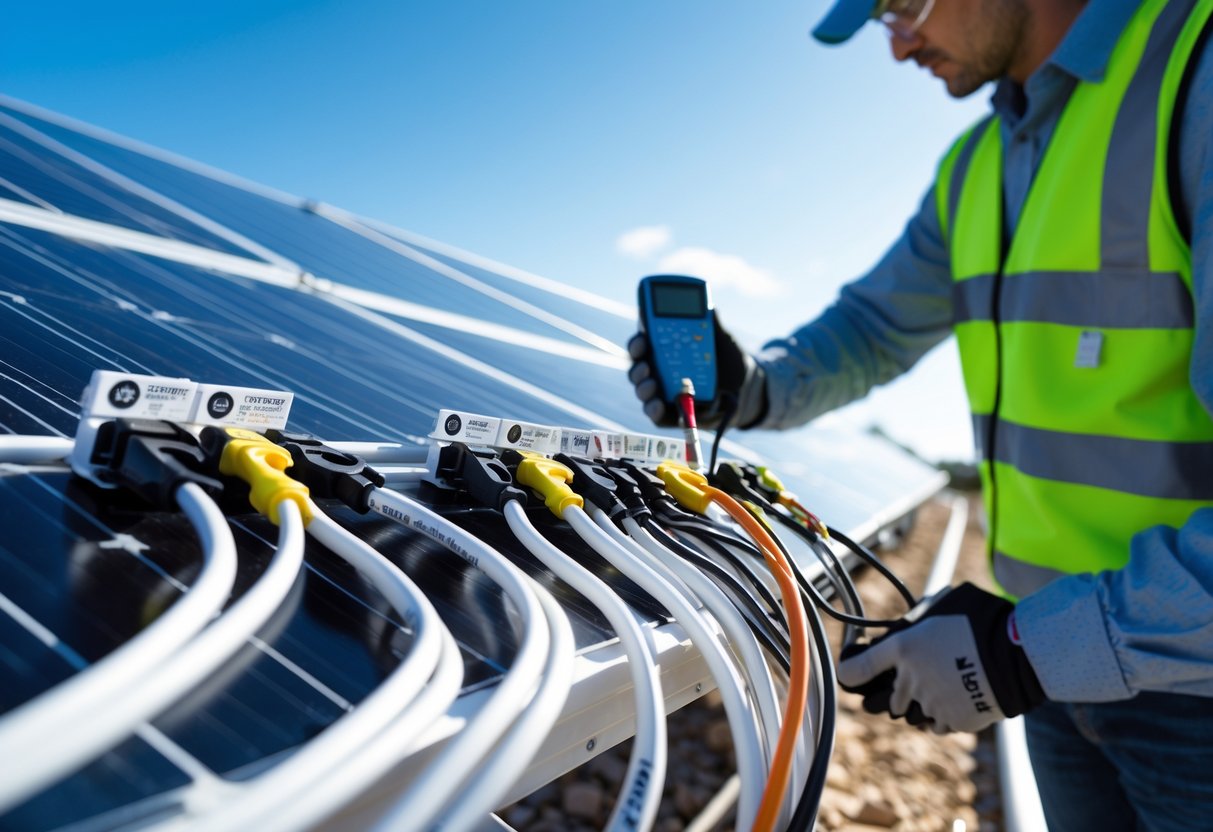
Cart Picking the right wire management components is one of those decisions that can make or break the long-term safety and performance of your solar project. UL certification is kind of a non-negotiable baseline for us—it’s the industry’s way of saying, “Yeah, this part actually holds up in the real world.” If you’ve ever dealt with a failed array or a failed inspection, you know how expensive skipping this step can get. We lean on UL-certified wire management components so we know every clip, tie, and conduit is up to the challenge—especially when the elements start testing your install.
When you get what UL certification actually covers—and how it fits into solar wire management—you’re in a much better spot to protect your assets and keep your O&M headaches to a minimum. The right components don’t just tick the safety box; they make installs smoother and keep maintenance crews happy years down the line.
If you zero in on the essentials—material durability, UV resistance, and proper fit for PV wiring—you’re setting yourself up for a system that actually delivers over its full service life. It’s not just about passing inspection; it’s about not getting that call-back two summers from now when a cable tie has turned to dust.
Understanding UL Certification for Solar Wire Management
We treat UL certification as our go-to proof that wire management components are up to code and can handle the abuse of a solar install—heat, sun, and all. It’s not just a sticker; it’s a signal that these cables, connectors, and accessories have survived actual stress testing (think: real-world conditions, not just a lab fantasy).
Why UL Certification Matters for Solar Projects
UL certification means a component has survived standardized tests for electrical insulation, temperature swings, and flammability.
In solar, where your cables are getting hammered by UV and carrying serious current, this isn’t just nice to have—it’s critical for reducing fire hazards and system downtime.
And let’s be real: passing UL means inspectors and utilities are way less likely to throw a wrench in your interconnection paperwork. They want to see UL listings on your bill of materials before they’ll green-light your system.
Certified components—like PV wire, conduit fittings, and cable ties—aren’t just tested once and forgotten. There’s ongoing oversight, so you’re not rolling the dice on a bad batch. That’s peace of mind for both safety and keeping those O&M costs from ballooning.
UL Listed vs. UL Recognized Components
UL Listed parts are the plug-and-play option—they’ve been tested as complete, standalone products. If you’re looking at PV cables or junction boxes with a UL Listed mark, you know you can drop them into your array without any extra hassle.
UL Recognized components are a bit different. They’re meant for integration inside larger assemblies and carry the UL Recognized Component Mark (UR). You’ll see these in things like custom-built combiner boxes or inverter internals, but they need further testing once they’re part of a system.
| Category | Typical Use | Compliance Scope | Example |
|---|---|---|---|
| UL Listed | Field-installed systems | Complete product | UL 4703 PV wire |
| UL Recognized | Internal components | Subassembly | AWM wire under UL 1015 |
You really can’t fudge this—using a Recognized part where a Listed one is required is a shortcut to failed inspections and, honestly, risk you don’t want.
Overview of Key UL Standards for Solar Wiring
There’s a handful of UL standards that matter most for solar wire management. UL 4703 is the big one for photovoltaic (PV) wire out in the field—it covers UV resistance, temperature rating, and insulation toughness.
UL 854 is what you want for service-entrance cables (the ones connecting your solar to the main panel). For internal wiring—think inside inverters or combiner boxes—you’ll see UL 1015, UL 1061, and UL 1569 for various Appliance Wiring Material (AWM) types. UL 817 is more niche, for cord sets and power-supply cords, usually with portable gear.
Each standard is tailored for a specific use case. If you’re matching your wire type to the right UL standard, you’re covering your bases on voltage, insulation, and the actual install conditions. Skipping this step is just asking for trouble later.
Essential Selection Criteria for UL-Certified Wire Management Components
When we’re sourcing UL-certified wire management, we’re not just checking a box—we’re looking at how these parts handle environmental abuse, pass flame tests, and keep their insulation game strong. Each of these directly impacts safety, system uptime, and your O&M budget.
Temperature Rating and Environmental Considerations
Solar sites throw everything at your wiring: heat waves, freezes, rain, relentless UV. We make sure every cable tie, bushing, and conduit is rated for the worst-case scenario—ambient and operational. For example, nylon clamps that can handle -40°C to 125°C are a must for rooftops or desert arrays. Materials like UV-stabilized nylon or EPDM rubber? Those are your friends for long-haul durability.
Don’t sleep on IP ratings either—especially if you’re running gear outdoors or near junction boxes. IP67 grommets keep moisture out, which is a lifesaver for preventing corrosion and shorts. If you spec materials that are tested for both temperature swings and environmental nastiness, you’re way less likely to get those dreaded warranty calls.
Flame Test Requirements and Fire Safety
UL certification includes flame test benchmarks—basically, how likely a material is to catch and spread fire. For solar, we’re hunting for components that meet UL94 V-0 or V-2 standards. These ratings limit flame spread and, crucially, how much stuff drips when it burns (nobody wants flaming plastic raining down in an attic).
Here’s a quick cheat sheet:
| UL94 Rating | Flame Extinguish Time | Drip Behavior | Typical Use |
|---|---|---|---|
| V-0 | ≤10 sec | No flaming drips | Enclosures, conduits |
| V-2 | ≤30 sec | Flaming drips allowed | Cable clips, clamps |
We always double-check that cable conduits and ties hold up after a heat event. Anything near combiner boxes or in attic runs needs to resist ignition from arc faults. UL flame-rated materials aren’t just a code thing—they’re real insurance against fire spreading through your array.
Insulation Thickness and Electrical Properties
Getting insulation thickness right is crucial if you want your conductors to stay reliably isolated, even with voltage spikes and the usual wear-and-tear from the environment. We always double-check that our UL-certified cables and accessories actually hit the minimum dielectric strength and creepage distance benchmarks for whatever system voltage class we’re working with.
Sure, thicker insulation gives you better mechanical protection, but let’s be honest—it can make the cable a pain to handle. It’s always a tradeoff. We lean toward products that have been run through UL 2556 or similar standards for dielectric breakdown and insulation resistance, just to cover all bases.
At terminations and junctions, you really can’t afford to let insulation quality slip. Any weakness there and you’re inviting leakage currents or, worse, a ground fault. We’re pretty picky about insulation materials that can actually hold their electrical properties when things heat up, because no one wants performance dropping off halfway through a solar array’s expected lifespan.


