

 Support
 Sign In
 Cart
Cart 
Wire gauge is a standardized measurement system that indicates the diameter and thickness of electrical wire, with the American Wire Gauge (AWG) system being the most widely used standard in North America. Understanding wire gauge is essential because it directly affects how much electrical current a wire can safely carry, its resistance, and how much heat it generates during use.
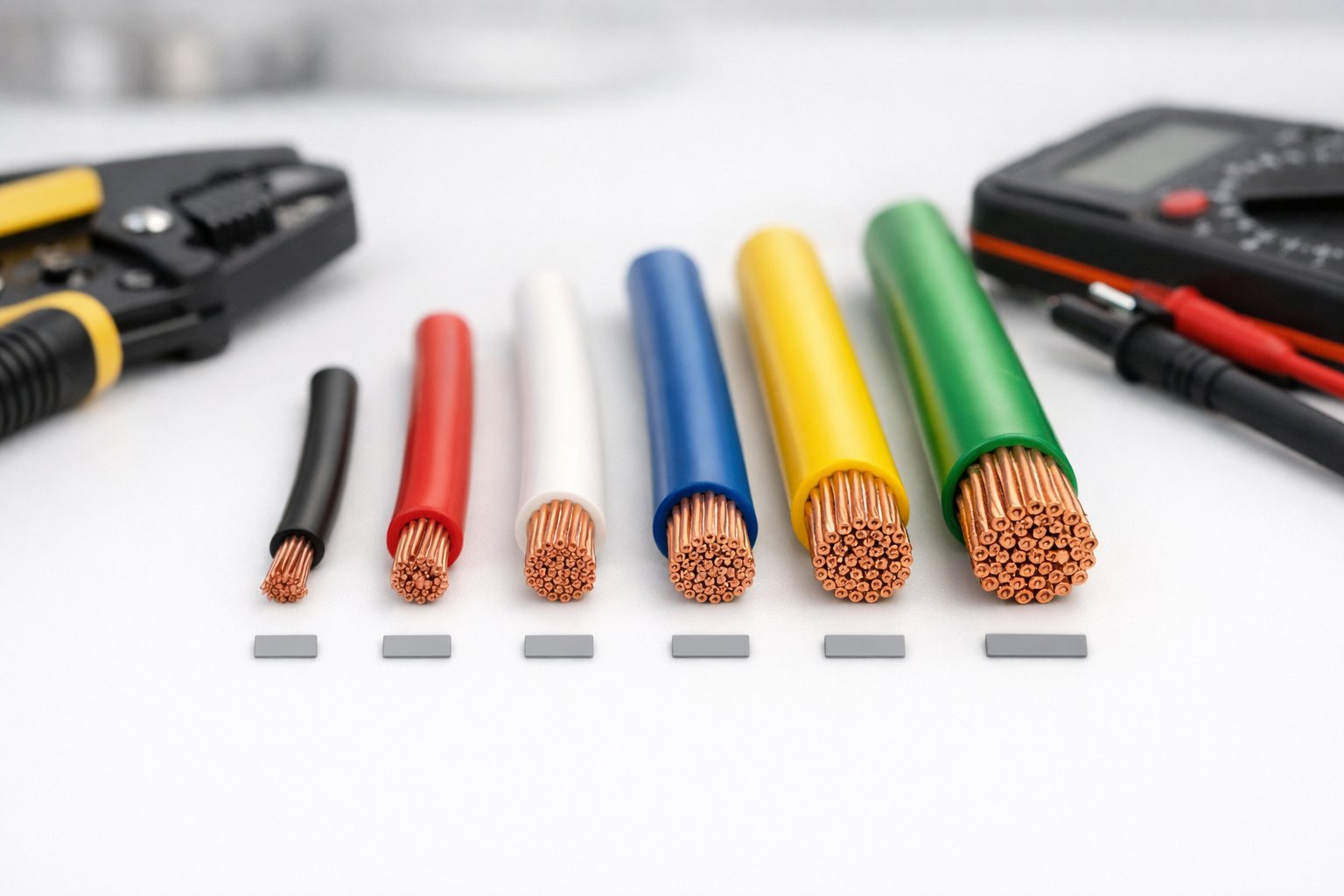
Selecting the correct wire gauge for your project prevents electrical hazards like overheating, fires, and equipment damage while ensuring your electrical system operates efficiently and meets code requirements. The gauge number works inversely to the wire’s actual size—lower gauge numbers indicate thicker wires that can handle more current, while higher gauge numbers represent thinner wires suited for lighter electrical loads.
In this guide, we’ll walk through how wire gauge systems work and match specific wire sizes to their most appropriate applications. Whether you’re wiring a home circuit, setting up automotive electronics, or working on a DIY project, understanding which gauge to use will help you complete your work safely and correctly.
Understanding Wire Gauge Systems
Wire gauge systems provide standardized measurements for wire thickness, with each system using specific numbering conventions to indicate conductor diameter and cross-sectional area.
What Is Wire Gauge?
Wire gauge is a standardized measurement system that defines the physical diameter and cross-sectional area of electrical conductors. We use these measurements to ensure wires can safely carry specific electrical loads without overheating or causing voltage drops.
The gauge system assigns numerical values to different wire sizes. These numbers directly correlate to the wire’s current-carrying capacity, resistance, and mechanical strength. We rely on gauge standards to maintain consistency across electrical installations and manufacturing processes.
Different regions and industries use various gauge systems. Each system has its own numbering scale and measurement methodology, but all serve the same fundamental purpose of specifying wire dimensions accurately.
How Gauge Numbers Relate to Wire Size
The relationship between gauge numbers and wire size follows an inverse pattern—lower gauge numbers indicate thicker wires, while higher numbers represent thinner conductors. A 10 AWG wire has a larger diameter than a 14 AWG wire.
This counterintuitive numbering system originated from the wire drawing process. Each successive draw through a die reduced the wire diameter, and manufacturers counted the number of draws. More draws meant a thinner wire and a higher gauge number.
We measure wire diameter using tools like micrometers or wire strippers with built-in gauge indicators. Wire gauge charts provide reference tables showing the exact diameter, cross-sectional area, and ampacity for each gauge number. These charts are essential for selecting appropriate wire sizes for specific applications.
American Wire Gauge (AWG) Explained
The American Wire Gauge (AWG) system is the standard measurement system we use throughout North America for electrical conductors. The AWG system covers wire sizes from 0000 (4/0) AWG, the largest standard size, up to 40 AWG, used for fine applications.
AWG numbers progress in a logarithmic scale. Every three gauge numbers roughly doubles or halves the wire’s cross-sectional area. For example, 10 AWG has approximately twice the area of 13 AWG.
We use circular mils to express the cross-sectional area in the AWG system. One circular mil equals the area of a circle with a one-mil (0.001 inch) diameter. For very large conductors exceeding 0000 AWG, we switch to kcmil (thousand circular mils), also written as MCM.
Other Wire Gauge Standards: SWG and kcmil
The Standard Wire Gauge (SWG), also called British Standard Wire Gauge, is the primary system used in the United Kingdom and some Commonwealth countries. SWG uses different diameter measurements than AWG for the same gauge numbers, making the systems incompatible without conversion charts.
SWG follows a similar inverse numbering pattern where smaller numbers indicate larger diameters. However, a specific SWG number corresponds to a different physical size than the same AWG number. We must always verify which gauge system applies to avoid dangerous sizing errors.
The kcmil designation appears in both systems for conductors larger than standard gauge sizes. These large-format wires commonly appear in industrial settings, utility installations, and high-amperage applications. We specify kcmil sizes directly by their circular mil area rather than gauge numbers, such as 250 kcmil or 500 kcmil.
Best Uses for Each Wire Gauge Size
Wire gauge selection directly impacts electrical safety, system efficiency, and code compliance. Different AWG sizes serve specific purposes based on their current capacity, with smaller gauge numbers handling higher amperage loads and larger numbers suited for low-power applications.
Common Wire Gauge Sizes and Typical Applications
Heavy-Duty Applications (4/0 AWG to 2 AWG)
We use 4/0 AWG, 3/0 AWG, and 2/0 AWG for main service entrances and power distribution systems in residential and commercial buildings. These wire sizes handle 150-400 amps depending on insulation type and installation method. 2 AWG and 4 AWG serve subpanels, large appliances, and electric vehicle charging stations. A 4 AWG copper wire typically supports 70-85 amps, making it suitable for electric ranges and air conditioning units.
Medium-Duty Circuits (6 AWG to 10 AWG)
6 AWG wire handles 55-65 amps and works well for 240-volt circuits powering electric water heaters, welders, and central air conditioners. We commonly see 8 AWG in 40-amp circuits for electric ranges and large workshop equipment.
10 AWG wire supports 30-amp circuits, including clothes dryers, water heaters, and air conditioning units in residential wiring. This 10-gauge wire provides adequate current capacity while remaining flexible enough for standard installation practices.
Standard Household Circuits (12 AWG to 14 AWG)
12 AWG represents the workhorse of residential wiring, supporting 20-amp circuits for kitchen outlets, bathrooms, and general-purpose receptacles. The National Electrical Code requires 12-gauge wire for most modern household circuits to accommodate increased electrical loads. 14 AWG wire handles 15-amp circuits and remains acceptable for lighting circuits and bedroom outlets. However, many electricians now default to 12 AWG even for 15-amp circuits to provide extra capacity and meet stricter electrical codes.
Low-Power Applications (16 AWG to 24 AWG)
16-gauge wire and 18-gauge wire serve low-voltage lighting, doorbells, thermostats, and speaker wire installations. These smaller wire sizes work for circuits drawing 10 amps or less. We use 18 AWG commonly in automotive wiring for accessories and in electronics for internal connections. 24-gauge wire appears in thermostat wiring, security systems, and data transmission applications where current demands remain minimal.
Factors Determining Wire Gauge Selection
Ampacity Requirements
Circuit amperage determines the minimum wire size we need for electrical safety. The ampacity of electrical wire—its current capacity—must exceed the circuit breaker rating by at least 25% for continuous loads. A 20-amp circuit requires 12 AWG copper wire, while a 30-amp circuit needs 10 AWG minimum. Wire sizing based solely on ampacity charts can lead to voltage drop issues over long distances. We must account for both the maximum current and the circuit length to ensure proper performance.
Conductor Material
Copper wire offers superior conductivity compared to aluminum wire, allowing smaller gauge sizes for the same ampacity. We typically use aluminum for larger service entrance conductors where cost savings justify the larger physical size needed. Aluminum wire requires special connectors and installation techniques to prevent oxidation at connection points. Many electrical codes restrict aluminum wire to professional installations by a licensed electrician due to fire risks from improper terminations.
Installation Method and Environment
Stranded wire provides flexibility for tight bends and frequent movement, making it ideal for automotive wiring and portable applications. Solid wire offers better contact in screw terminals and costs less for permanent residential wiring installations. Temperature ratings affect ampacity significantly. We derate wire current capacity when bundled with other conductors or installed in hot environments. The National Electrical Code provides specific derating factors based on ambient temperature and installation conditions.
Voltage Drop Considerations
Voltage drop becomes critical in long wire runs, especially for low-voltage lighting and power distribution systems. A 2% voltage drop represents the maximum acceptable for branch circuits, while 3% applies to feeder circuits. We calculate voltage drop using wire resistance, current, and distance. What is wire gauge selection without accounting for voltage drop often results in dimming lights, motor failures, and equipment malfunction despite meeting ampacity requirements.
Choosing the Right Wire for Circuits and Appliances
Kitchen and Bathroom Circuits
Kitchen outlets require 12 AWG wire on 20-amp circuits to handle high-wattage appliances like microwaves, toasters, and coffee makers. We install at least two separate 20-amp circuits for countertop receptacles in modern kitchens per electrical codes.
Refrigerators often use dedicated 15-amp circuits with 14-gauge wire, though 12 AWG provides better long-term reliability. Bathroom outlets need 12 AWG on 20-amp circuits, with ground fault circuit interrupter protection mandatory.
Major Appliances
Electric ranges typically require 6 AWG or 8 AWG wire depending on their rated amperage and distance from the panel. A 40-amp range circuit needs 8-gauge wire as minimum, while a 50-amp circuit requires 6 AWG. Electric dryers generally use 10 AWG on 30-amp circuits. Central air conditioning units vary widely, with smaller units on 20-amp circuits using 12-gauge wire and larger systems requiring 8 AWG or 6 AWG on 40-50 amp circuits.
Lighting and General Outlets
Lighting circuits traditionally used 14 AWG wire on 15-amp circuits. Many jurisdictions now mandate 12 AWG even for lighting to accommodate LED drivers, smart switches, and future electrical loads. General-purpose outlets in bedrooms and living areas accept either 14-gauge wire on 15-amp circuits or 12-gauge wire on 20-amp circuits. We recommend 12 AWG throughout to provide consistent capacity and simplify wire inventory during installation.
Ground Wire Requirements
Ground wire sizing follows the circuit conductor size, with specific minimum requirements in the National Electrical Code. A circuit using 12 AWG conductors requires 12 AWG ground wire, while 10 AWG circuits need 10 AWG grounding conductors. Some installations allow smaller ground wire sizes when the circuit conductors exceed certain thresholds. We typically match ground wire gauge to circuit wire gauge for simplicity and enhanced electrical safety.


